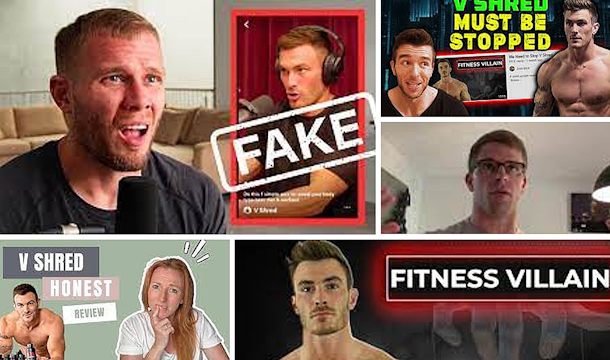
Who the heck is V-Shred?
I am not sure exactly who V-Shred is and/or if he actually has a real name. But for some reason, he has drawn the ire of other social media influencers on different platforms. Perhaps they are jealous of his success or maybe he is just an easy target? I’m not quite certain. But I have discovered that in the tumultuous realm of social media, where kale is king, detox teas are queen, and hashtags reign supreme, there's a new battle brewing: health and wellness influencers duking it out in the virtual arena. So, are you ready for the clash of the hashtags, the showdown of the selfie sticks, and the battle of the avocado toast? Brace yourselves, folks, because the wild world of social media influencers is starting to look like a never-ending episode of a reality show where everyone thinks they're the star.
Picture this: Instagram influencers are throwing shade at each other over the perfect kale smoothie recipe. TikTok stars are dueling it out, not with dance moves, but with wellness tips that seem more like wizardry than wisdom. It's a jungle out there, and the jungle is overrun with self-proclaimed health gurus who wouldn't know a dumbbell from a dinner bell!
Is Social Media a good place for health and wellness advice?
Now, before you dive headfirst into this social media circus, you might want to reconsider taking your health and wellness advice from these digital gladiators. Why, you ask? Well, for one, wellness wisdom often takes a backseat to sensationalism and, well, pure nonsense. So, social media influencers are not your best bet when it comes to your well-being. In addition, obtaining health and wellness advice from social media influencers can be problematic for several reasons:
Lack of Expertise and Credentials:
Many social media influencers do not have formal education or qualifications in health, nutrition, or medicine. They often base their advice on personal experiences, anecdotal evidence, or unverified information. Unlike healthcare professionals or registered dietitians who undergo rigorous training and education, influencers may not have the necessary expertise to provide accurate health advice.
Conflict of Interest:
Social media influencers often have financial incentives tied to the products or brands they promote. They may be sponsored by companies selling dietary supplements, weight loss products, or other wellness-related items. This financial motivation can lead to biased recommendations that prioritize profit over your health.
Cherry-Picked Information:
Influencers may selectively present information that supports their claims or agenda, while ignoring contradictory evidence. This cherry-picking of data can mislead you and result in potentially harmful decisions.
One-Size-Fits-All Advice:
Health and wellness advice should be tailored to individual needs and health conditions. Social media influencers typically provide generalized advice that may not be suitable for everyone. Following such advice without considering your unique circumstances can lead to adverse health outcomes.
Misleading Before-and-After Photos:
Many influencers use striking "before-and-after" photos to showcase the effectiveness of a particular diet or fitness regimen. However, these images can be manipulated or may not accurately represent the results achievable for most people. They can create unrealistic expectations and contribute to body image issues.
Lack of Accountability:
Unlike healthcare professionals, influencers are not held accountable to any regulatory body for the advice they provide. If their recommendations lead to health problems or misinformation, there is often no formal recourse or accountability.
Trends and Fads:
Social media often perpetuates health and wellness trends and fads that may not have a scientific basis. Following such trends without proper evaluation can result in ineffective or even harmful practices.
Emphasis on Appearance Over Health:
Some influencers focus primarily on aesthetics and appearance rather than overall health. Pursuing an idealized body image can lead to unhealthy behaviors, including extreme diets and exercise regimens.
Confirmation Bias:
Social media algorithms tend to show you content that aligns with your existing beliefs and interests. Following influencers can create confirmation bias, reinforcing your preconceived notions and potentially discouraging you from seeking diverse, evidence-based perspectives.
In summary, while social media can be a valuable platform for connecting with others and sharing information, it is essential to exercise caution and critical thinking when considering health and wellness advice from influencers. Relying on qualified healthcare professionals and trusted sources ensures that you receive evidence-based guidance tailored to your individual needs and that prioritizes your well-being over profit or personal gain.
Where should I get my health and wellness advice from?
When seeking nutrition and health advice, it is crucial to rely on credible sources to make informed decisions about your well-being. Here are some reliable sources from which you should obtain nutrition and health advice, along with the reasons for their credibility:
Registered Dietitians (RDs) and Nutritionists:
Registered Dietitians are healthcare professionals with a minimum of a bachelor's degree in nutrition and dietetics, followed by an internship and national certification. They provide evidence-based dietary guidance tailored to individual needs and conditions. Nutritionists with relevant certifications and education can also offer sound advice.
Medical Professionals:
Physicians, nurses, and other healthcare providers are reliable sources for health advice. They can offer personalized recommendations and treatment plans based on your medical history and current health status.
Government Health Agencies:
National health agencies, such as the Centers for Disease Control and Prevention (CDC) and the World Health Organization (WHO), provide evidence-based health guidelines, research, and public health recommendations.
Nutrition and Health Websites with Trusted Sources:
Websites like Mayo Clinic, WebMD, and Harvard Health Publishing offer reliable, up-to-date information on various health topics, often reviewed by medical experts.
Peer-Reviewed Journals and Scientific Literature:
Peer-reviewed scientific journals like the Journal of the American Medical Association (JAMA) and Nutrition Reviews are excellent sources for in-depth, evidence-based information on nutrition and health. These sources undergo rigorous evaluation by experts in the field.
Professional Organizations:
Look to organizations like the American Heart Association and the American Cancer Society for reliable information and guidelines related to heart health, cancer prevention, and more.
In conclusion, obtaining nutrition and health advice from credible sources ensures that you receive information backed by scientific research and expert consensus, helping you make informed decisions about your well-being.
Reference List:
Academy of Nutrition and Dietetics. (2020). "Find an Expert: Registered Dietitian Nutritionist." www.eatright.org/find-an-expert
American Heart Association. (2021). www.heart.org
American Cancer Society. (2021). www.cancer.org
American Medical Association. (n.d.). "Doctor Finder." www.ama-assn.org/doctor-finder
Centers for Disease Control and Prevention. (2021). "Nutrition." www.cdc.gov/nutrition
Harvard Health Publishing. (2021). "Nutrition." www.health.harvard.edu/nutrition
Journal of the American Medical Association. (n.d.). www.jamanetwork.com/journals/jama
Nutrition Reviews. (n.d.). academic.oup.com/nutritionreviews
Mayo Clinic. (2021). "Nutrition and Healthy Eating." www.mayoclinic.org/healthy-lifestyle/nutrition-and-healthy-eating
WebMD. (2021). "Healthy Eating & Diet: Nutrition, Recipes & More." www.webmd.com/diet